Taiwan Tati Cultural and Educational Foundation

 
  • Increase font size
  • Default font size
  • Decrease font size
Home The News

News

Granddaughter visits ex-president for Father’s Day


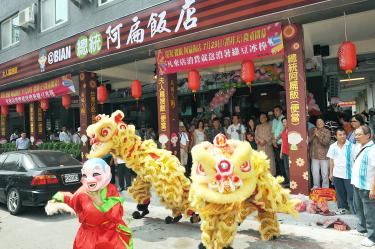
People watch a traditional lion dance during the opening ceremony of the President A-bian Hotel, named in honor of former president Chen Shui-bian, in Greater Kaohsiung’s Sanmin District on July 29.
Photo: Huang Chih-yuan, Taipei Times

As households nationwide gathered yesterday to celebrate Father’s Day, five-year-old Chen Chieh-hsin (陳潔歆), the granddaughter of former president Chen Shui-bian (陳水扁), expressed her hope for a family reunion in a hand-written card.

“Dear Grandpa, this is my first time to write you a card. Are you happy? People often told me how much I resemble you, but when can you finally come home for a family reunion?” Chen Chieh-hsin wrote in a card delivered to her grandfather during a visit to Taipei Prison on the eve of Father’s Day.

Last Updated ( Saturday, 11 August 2012 10:09 ) Read more...


Self-immolator identified as Kirti monk Lobsang Tsultrim

Kirti monk Lobsang Tsultrim in a photo taken in 2009. (Photo/Kirti
Monastery)
Kirti monk Lobsang Tsultrim in a photo taken in 2009. (Photo/Kirti Monastery)

DHARAMSHALA, August 7: The Tibetan who self-immolated yesterday in Ngaba, eastern Tibet has been identified as 21-year-old Lobsang Tsultrim, a monk at the Kirti Monastery.

In a release today the exile seat of the Kirti Monastery in Dharamshala said Lobsang Tsultrim set himself on fire at around 5.05 pm (local time) yesterday.

Read more...


Page 166 of 250

Newsflash

The US has started bulk buying Japanese seafood to supply its military there in response to a ban China imposed after Tokyo released treated water from its crippled Fukushima Dai-ichi nuclear power plant into the sea.

Unveiling the initiative in an interview yesterday, US Ambassador to Japan Rahm Emanuel said Washington should also look more broadly into how it could help offset China’s ban that he said was part of its “economic wars.”

China, which had been the biggest buyer of Japanese seafood, says its ban is due to food safety fears.