Taiwan Tati Cultural and Educational Foundation

 
  • Increase font size
  • Default font size
  • Decrease font size
Taiwan Tati Cultural and Educational Foundation

Caution advised for year ahead

Last year began with the election of President Tsai Ing-wen (蔡英文). Beijing refuses to recognize Taiwan as a nation, but considers it a core interest. While Tsai was certainly not Beijing’s preference for leader, it can at least content itself that she is a known quantity. The year ended with the election of Donald Trump as president of the US, a country core to China’s strategic, economic and hegemonic interests. While Trump might have been Beijing’s preference over former US secretary of state Hillary Rodham Clinton at the time, recent weeks have demonstrated that he is most certainly not a known quantity.

Read more...
 

Trump is a realization of China’s worst fears

US president-elect Donald Trump won the US election because he refused to play by the rules and his non-traditional approach to foreign policies as an incoming US president only reaffirmed his tendency to break the rules. Politicians, academia and the media have all described him as “unpredictable.”

Advocates of Sinocentrism in Taiwan and China have denounced him as a mere “businessman” who would go back on his word at every opportunity to get what he can.

Read more...


Embracing Taiwan’s bargaining chip role

President Tsai Ing-wen’s (蔡英文) telephone call with US president-elect Donald Trump has snowballed into a political storm, a development Beijing probably never anticipated. For years Beijing has heavily relied on the US to promote its “one China” policy without realizing how fragile their plan was. Indeed, Taiwanese know full well that they have been used by the US as a bargaining chip against China, yet they also know they can use that to their advantage, which is key to reversing the situation.

Read more...
 

Japan association name-change lauded

Democratic Progressive Party (DPP) lawmakers yesterday lauded the Interchange Association, Japan’s decision to change its name to the Japan-Taiwan Exchange Association, saying that the move would clarify Taiwan-Japan ties and be a milestone in relations between the two nations.

Japan ended formal recognition of Taiwan in 1972 and subsequently established the non-official Interchange Association, Japan, to act as its de facto embassy in Taipei.

Read more...


Page 684 of 1526

Newsflash

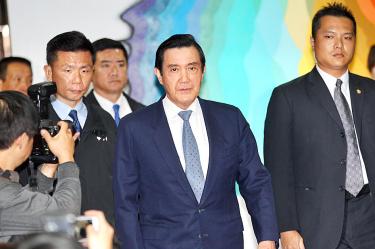
A controversy surrounding an Associated Press (AP) interview with President Ma Ying-jeou (馬英九) took a new turn yesterday after Government Information Office (GIO) Minister Johnny Chiang (江啟臣) sent a letter to John Daniszewski, the international editor at AP, requesting that the news agency “investigate the causes of distortions in the interview piece” and make corrections as soon as possible.

At the heart of the controversy is a section of the interview published by AP on Tuesday where Ma’s remarks are portrayed as suggesting that sensitive political talks with Beijing, including security issues, could start as early as his second four-year term, provided he is re-elected in 2012.