


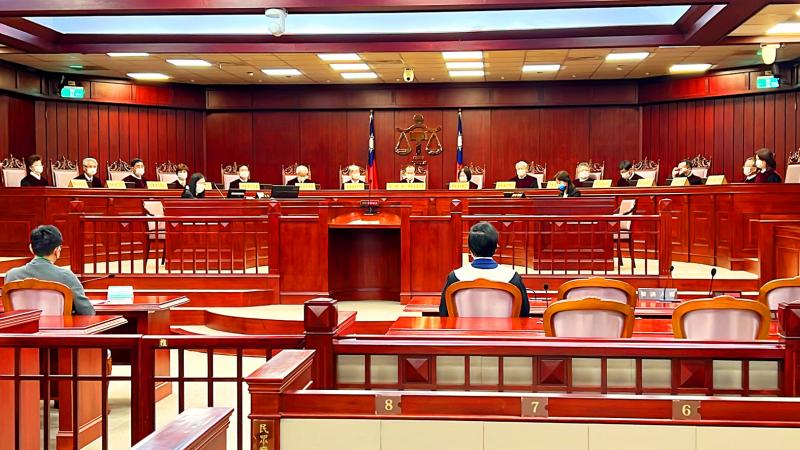
A legal provision that grants indigenous status to people with only one indigenous parent based strictly on their name has been declared unconstitutional by the Constitutional Court.
The court took aim at Article 4, Paragraph 2 of the Status Act for Indigenous Peoples (原住民身分法), which states: “Children of intermarriages between indigenous peoples and non-indigenous peoples taking the surname of the indigenous father or mother, or using the indigenous peoples traditional name shall acquire indigenous peoples status.”
The court said in a statement on Friday that it struck down the clause because it contravened the Constitution’s “intention” to protect indigenous peoples’ right to personal identities and guarantee racial equality.
It ordered the government to amend the law within two years, saying that if the deadline was not met, people in such situations could automatically identify as indigenous and register their status.
An estimated 95,000 people in Taiwan would be eligible to declare their indigenous status under such circumstances.
The Constitutional Court took up the issue because of a case involving a seven-year-old girl surnamed Wu (吳) whose mother is Truku and whose father is not indigenous.
When the father tried to register his daughter’s indigenous status at the Nangang Household Registration Office, the request was rejected because she used her father’s Chinese surname, which did not comply with the act. The family then lost an administrative appeal against the decision.
The court said that the clause contravened Article 7 of the Constitution, which stipulates that all people are equal under the law, regardless of gender.
As children in Taiwan generally take their father’s surname, the clause in question means that children who have an indigenous father can get indigenous status while those with an indigenous mother cannot, the court said.
In terms of identity, the court said the provision’s attempt to tie indigenous identity to a parent’s surname was flawed, as the concept or tradition of a “surname” does not exist in indigenous culture.
The Council of Indigenous Peoples had said the law was constitutional because it gave people the right to choose their identity.
However, it said it respected the court’s decision and would consult with indigenous groups before proposing legal provisions that would meet their needs and fulfill the court’s requirements.
Source: Taipei Times - 2022/04/03
Add this page to your favorite Social Bookmarking websites


