


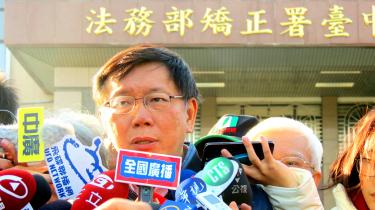
Taipei mayor-elect Ko Wen-je (柯文哲) yesterday visited former president Chen Shui-bian (陳水扁) at Taichung Prison, restating his support for Chen to receive home care in light of his deteriorating health.
Ko was accompanied by a delegation that included Democratic Progressive Party (DPP) Legislator Lee Ying-yuan (李應元) and Ketagalan Academy president Chang Fu-mei (張富美).
As the former convener of Chen’s volunteer medical team, Ko said the ex-president has exhibited signs of chronic illness in his mental and physical health since at least two years ago, along with other disorders.
“Chen has been examined by three separate teams from Taipei Veteran’s General Hospital, Taichung Veteran’s General Hospital and Kaohsiung Chung Gung Memorial Hospital,” Ko said, adding that it would mean little to conduct more examinations, as the conclusions would remain the same.
“Even if we sent 10 experts or more to examine his health, we would reach the same conclusion. The rest would be up to the political wisdom of President Ma Ying-jeou (馬英九),” Ko said.
Ko said he considered home care a better option than medical parole or amnesty, adding that it would be detrimental to society to have Chen die in prison.
“He is mentally ill. He is unable to overcome psychological hurdles, just like two years ago,” Ko said.
Source: Taipei Times - 2014/12/17
Add this page to your favorite Social Bookmarking websites


